
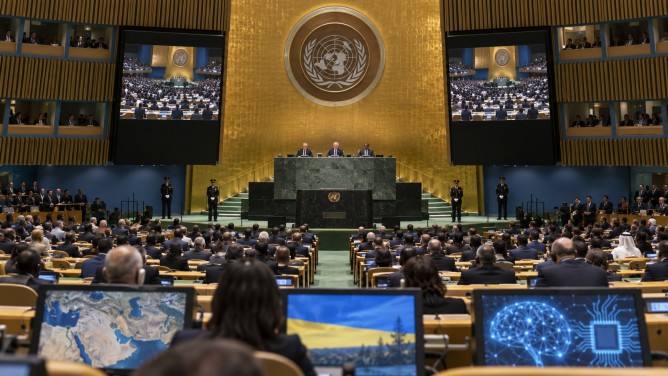
The 81st United Nations General Assembly is set to convene in New York, drawing global attention as world leaders gather to address pressing international issues. The assembly comes at a time when the international community is grappling with ongoing conflicts in the Middle East and Ukraine, rapid advancements in artificial intelligence, and the future of global cooperation.
From September 22 to 26 and again on September 28, the high-level general debate will provide a platform for leaders to engage in crucial diplomatic discussions. Among those attending is U.S. President Donald Trump, who is expected to deliver an address to the General Assembly. The event will also facilitate a meeting between Trump and Ukrainian President Volodymyr Zelenskyy to discuss the ongoing war in Ukraine, which remains a focal point of concern for its impact on civilians and global food and energy security.
The Middle East conflict, particularly involving Iran, is another significant issue on the agenda. The region’s security challenges and their effects on international diplomacy and energy supplies will be central to discussions. Iranian President Masoud Pezeshkian and Israeli Prime Minister Benjamin Netanyahu will both be present, potentially influencing the dialogue surrounding regional tensions.
As artificial intelligence continues to develop at a rapid pace, it has emerged as a critical topic of discussion. UN Secretary-General António Guterres has emphasized the need for international cooperation and the establishment of common safeguards. This reflects the growing importance of AI governance on the global stage, with the UN having previously set up an advisory body dedicated to this issue.
In addition to these key topics, the United Nations itself faces financial challenges and scrutiny over its capacity to effectively address global crises. The United States recently contributed $725 million to meet its UN obligations, thereby maintaining its voting rights in the General Assembly. However, the U.S. continues to advocate for reforms and spending reductions within the organization.
With Secretary-General Guterres set to leave office at the end of 2026, leadership transition considerations add another layer to the complex discussions expected at this year’s General Assembly session, as nations aim to navigate shared challenges in an increasingly interconnected world.