
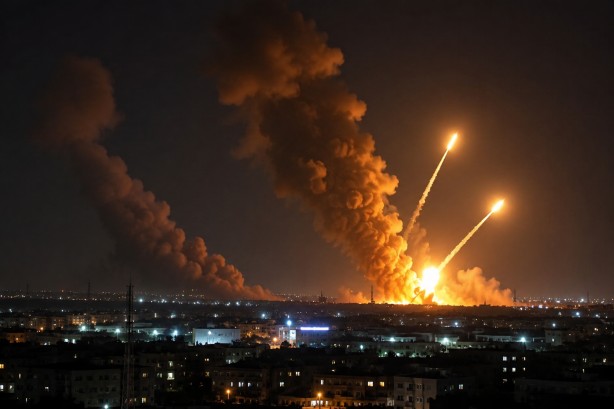
Recent military actions have heightened tensions in the Middle East as the United States resumed strikes on Iranian targets, following a short-lived lull in hostilities. This escalation comes on the heels of Iran’s assault on a U.S. military installation in Jordan, which houses American forces. In a stern warning, President Donald Trump had previously indicated that the U.S. would retaliate strongly against any Iranian aggression.
The U.S. Central Command detailed that American military forces conducted a series of strikes over a span of two hours, hitting numerous sites associated with Iran’s Revolutionary Guard Corps. The targets included various military infrastructure such as command centers, missile and drone facilities, as well as coastal defense and surveillance locations. The impact of these strikes was felt in multiple areas, with reports of explosions on Qeshm Island near the strategic Strait of Hormuz, and in Iran’s Khuzestan province, where state media confirmed at least two injuries.
This aggressive military move follows prior U.S. operations against Iran-backed militias in Iraq, during which several fighters and Iranian advisers reportedly lost their lives. The latest developments have sparked concerns over the potential for the conflict to expand further across the region. Meanwhile, diplomatic efforts by international mediators aimed at restarting negotiations between the United States and Iran remain at a standstill.
The surge in hostilities has also had significant economic repercussions. Global energy markets have reacted with alarm to the renewed tensions, particularly due to worries about possible disruptions in oil supply routes in the Middle East. As a result, Brent crude oil prices have surged more than 7%, reflecting the heightened anxiety over the stability of energy flows through critical shipping lanes in the region.