
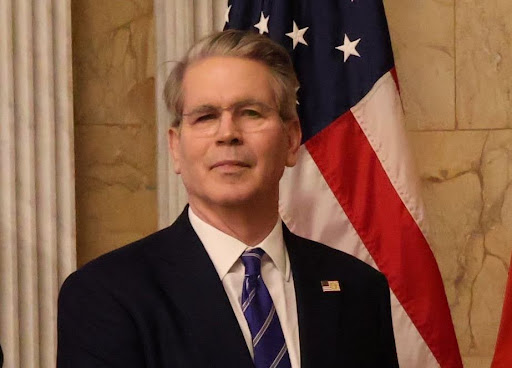
Scott Bessent has unveiled what he calls a “home run” H-1B visa policy, clarifying Donald Trump’s recent, seemingly softer, comments on immigration. The vision is not for permanent settlement, but for a temporary “knowledge transfer.” Under this plan, skilled foreign workers would be brought in for a fixed term to “train the US workers” and would then be required to “go home.”
Donald Trump had previously puzzled observers by stating a need to “bring talent into the country.” He remarked that Americans lack “certain talents” and that “people have to learn,” suggesting a new appreciation for the role of skilled immigrants in the economy, particularly in high-tech manufacturing and defense.
This apparent pivot was quickly re-contextualized by Bessent. He explained that the policy is not about easing restrictions, but about a highly structured, temporary program. The goal is to use foreign expertise as a catalyst to upskill the American workforce, not to replace it.
Bessent described a system where skilled foreigners would receive temporary visas, perhaps for “three, five, or seven years.” Their explicit purpose would be to teach American workers the skills needed in sectors where the US has fallen behind, such as semiconductor manufacturing.
This “train-and-return” model, Bessent argued, is the perfect solution. It addresses the fact that “An American can’t have that job, not yet,” while ensuring the long-term benefit goes to the domestic workforce. Once the American workers are fully trained and can “fully take over,” the foreign trainers’ mission is complete, and they return home.