
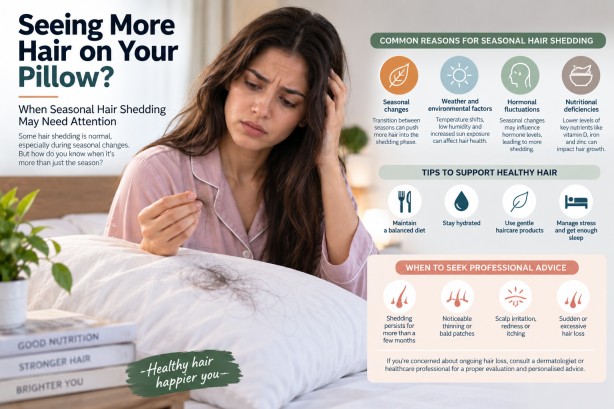
Discovering more hair than usual on your pillow, in your comb, or in the shower can be alarming. Although hair shedding can increase with seasonal changes, not all instances of excessive hair loss should be disregarded as a mere weather-related phenomenon. Understanding the pattern, duration, and severity of hair loss can guide you in determining when it might be necessary to pay closer attention.
Hair goes through various phases of growth, rest, and shedding naturally. During certain times, a larger number of hairs may enter the shedding phase, making hair fall seem more noticeable. Generally, mild seasonal shedding resolves on its own and doesn’t result in significant changes in overall hair density. However, when hair fall becomes persistent or increasingly heavy, it may be due to other causes and should not be automatically attributed to seasonal shifts.
Temporary hair shedding tends to be mild and usually improves on its own. In contrast, excessive shedding is more pronounced, with significant amounts of hair falling out during washing, brushing, or styling. Some individuals might observe that their hair appears thinner, especially around the parting or hairline. Monitoring any sudden changes in hair loss is crucial, particularly if it persists for several weeks. Professional advice should be sought if you experience prolonged shedding for several months, visible thinning of the scalp, a reduction in overall hair density, concentration of hair loss in specific areas, or if shedding is sudden and unusually heavy.
Persistent hair loss can stem from various causes, such as nutritional deficiencies, thyroid-related issues, hormonal changes, significant stress, illness, rapid weight loss, or certain medications, all of which can disrupt the hair-growth cycle. Genetic factors may also contribute to gradual hair thinning. Given the diverse potential causes, it is advisable to evaluate persistent hair loss rather than treat it based on assumptions alone.
Maintaining a balanced lifestyle can support normal hair growth. Ensure your diet includes enough protein and essential nutrients, avoid unnecessarily restrictive diets, manage stress, and maintain a consistent sleep routine. Gentle hair care is also important; avoid excessive heat styling, very tight hairstyles, and harsh chemical treatments when your hair is already weak or shedding heavily. In essence, finding a few extra strands on your pillow or in the shower doesn’t automatically indicate a serious problem. While seasonal changes and the natural hair-growth cycle can temporarily increase shedding, the key factors to monitor are the pattern, duration, and visible changes in hair density. If shedding remains unusually heavy, continues for an extended period, or leads to noticeable thinning, seeking professional evaluation is advisable rather than waiting for the issue to resolve on its own.