
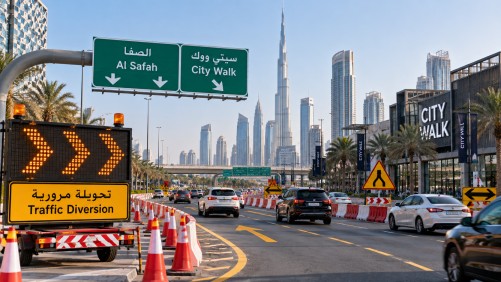
Dubai is undergoing a significant transformation in its road infrastructure as part of a broader initiative to enhance connectivity and ease traffic congestion. Central to this effort is the Dh2 billion Latifa bint Hamdan corridor project, a major undertaking aimed at linking key roads across the emirate. Spanning 12 kilometres, this project will establish crucial connections between Sheikh Zayed Road, Al Khail Road, Al Meydan Street, Sheikh Mohamed bin Zayed Road, Sheikh Zayed bin Hamdan Al Nahyan Street, and Emirates Road.
In tandem with these grand plans, Dubai’s Roads and Transport Authority (RTA) has introduced traffic diversions around the Al Safah and City Walk areas. These changes affect both Al Satwa Street and Al Multaqa Street, ensuring continued traffic flow and improved access during ongoing construction. These adjustments are part of a wider development project aimed at upgrading Al Safa Street to better accommodate the city’s growing transportation needs.
The comprehensive infrastructure upgrades, which include the construction of seven bridges covering 2.3 kilometres and eight tunnels spanning 900 metres, are set to be completed by the end of 2028. Once finished, the Latifa bint Hamdan corridor is expected to handle over 16,000 vehicles per hour in both directions, significantly improving traffic conditions in the region.
These developments underscore Dubai’s commitment to advancing its transportation network to keep pace with urban growth. By investing in such large-scale projects, the emirate aims to not only reduce congestion but also streamline the movement of people and goods across its bustling cityscape.