
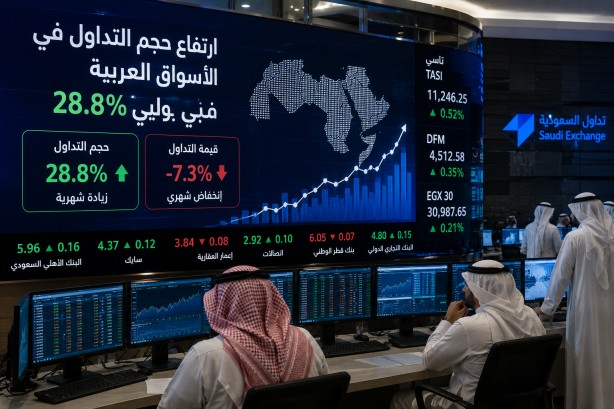
In a notable shift, Arab stock markets witnessed a substantial surge in trading activity during July, with the number of shares traded jumping by 28.82% compared to June. The total trading volume for the month reached 261.86 billion shares, up from 203.27 billion shares the previous month. This increase was primarily fueled by heightened activity on the Iraq Stock Exchange, with Egypt also contributing significantly to the rise.
Despite the robust trading volume, the overall value of transactions across these markets saw a downturn, falling 16.82% to $90.24 billion in July from $108.48 billion in June. This decline in transaction value was observed across several key markets in the region, such as Egypt, Saudi Arabia, Dubai, Abu Dhabi, and Kuwait, indicating a complex economic landscape with varying investment sentiments.
Market performances across the region were mixed, reflecting diverse investor reactions and economic conditions. Notably, Egypt’s EGX30 index stood out as a strong contender, posting a 5.85% gain over the month. Other regional exchanges also experienced gains, although the performance varied widely, underscoring the differentiated economic trajectories within the Arab world.
While the overall market capitalization of Arab stock exchanges remained largely stable, there was a slight uptick of 0.06%, bringing the total to approximately $4.31 trillion. This marginal increase suggests resilience amidst fluctuating values and highlights the dynamic nature of the region’s financial markets.
These developments point to an intriguing pattern where increased trading activity is occurring alongside weaker transaction values and varied performances among major equity markets in the Arab region. This scenario presents both opportunities and challenges for investors navigating these complex and evolving financial landscapes.