
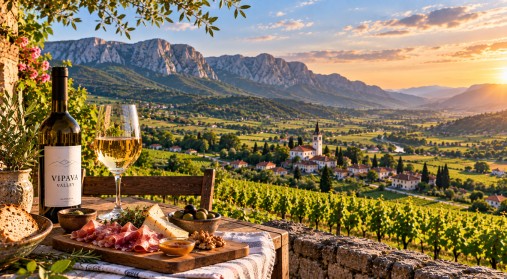
Nestled in the southwest corner of Slovenia, the Vipava Valley offers a serene retreat imbued with agricultural traditions, where vineyards, mountains, and charming villages paint a picturesque landscape. Situated about an hour’s drive from Ljubljana and close to the Italian border, this region is characterized by the Vipava River, expansive agricultural fields, and the dramatic karst hills, which are densely covered with vineyards and forests.
A significant natural influence on the valley is the burja, a fierce seasonal wind that sweeps down from the Alps. This wind, along with the valley’s dry conditions and unique karst soil, has helped shape a distinctive culture of farming and viticulture that is central to the local economy and tourism industry. The slopes of the valley are lined with vineyards, and visitors can explore a variety of regional wine styles and traditional winemaking techniques at the many small wineries and estates that dot the landscape.
Gastronomy is also a key attraction in the Vipava Valley, with local cuisine that highlights mature cheeses, fresh goat and sheep products, and cured meats, complemented by vegetables, herbs, and classic Slovenian recipes. Restaurants and agritourism establishments in the area often prioritize locally sourced ingredients, offering diners an authentic taste of the region.
Tourism in the valley is further enriched by the presence of historic villages, where old farmhouses and rural buildings are being transformed into accommodations. This not only preserves the traditional architecture but also enhances the tourism sector’s growth. Outdoor enthusiasts will find plenty to explore, with cycling routes linking vineyards and villages and trails that venture into the hills. The varied terrain is also ideal for paragliding and other outdoor activities.
For history buffs, the Roman heritage of Ajdovščina and the historic streets of Vipavski Križ provide a fascinating glimpse into the past. The cultural landscape around Nova Gorica, shaped by its proximity to the Slovenian-Italian border, offers another layer of intrigue. Unlike regions dominated by large hotel chains, Vipava Valley’s tourism development is marked by smaller accommodations, family-run farms, and local activity providers, maintaining its rural charm and offering a peaceful alternative to Slovenia’s more crowded tourist destinations.