
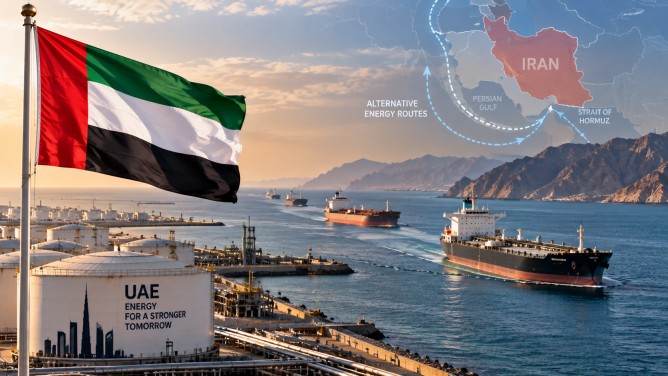
The United Arab Emirates is actively working on developing alternative pathways for its energy exports and trade, aiming to lessen its reliance on the Strait of Hormuz due to the ongoing tensions between the United States and Iran. Anwar Gargash, an adviser to the UAE president, emphasized that the nation would not allow its energy exports and economic progress to be “held hostage” by these conflicts. Efforts are underway to expand port facilities on the UAE’s eastern coast while also advancing the construction of pipelines, railways, and other trade routes.
While acknowledging the potential for improved relations with Iran, Gargash cautioned that rebuilding trust following recent attacks could take a considerable amount of time. He also underscored the need for enhanced coordination among the Gulf Arab states to address regional security challenges effectively. Meanwhile, Qatar echoed the call for increased self-reliance among Gulf countries. According to Majed al-Ansari, a spokesperson for Qatar’s Foreign Ministry, while strategic ties with the United States remain crucial, they should not be solely relied upon for the region’s security.
The Strait of Hormuz continues to be a focal point of concern, as it is a critical chokepoint through which a substantial portion of the world’s energy supplies pass. Any disruptions in this vital waterway have led to higher energy prices and have stirred apprehensions about the global economy. The UAE’s initiatives are part of a broader strategy to ensure the stability and security of energy exports in light of these risks.
Gargash firmly stated that freedom of navigation should never be used as a bargaining chip and advocated for credible assurances to safeguard Gulf countries from potential future attacks. The UAE’s strategic moves to diversify its energy export routes reflect a proactive approach to securing its economic interests amid geopolitical uncertainties.